Alienware announces AlienExchange trade-in program

While they’re still far from eMachines-territory, those in the market for an Alienware system can now knock a few bucks off their desktop or laptop of choice — if they’re willing to fork over some of their old gear, that is. That can be done as part of the company’s just-launched AlienExchange program, which will let you trade in everything from cellphones and MP3 players to game consoles and digital cameras to computers and monitors in exchange for an AlienWare gift card or a plain old check. Those trading in their old Alienware system will also get an additional $200 on top of the regular trade-in value as a bonus. If that sounds like reason enough to clean out your closet, you can hit up the link below to get a quote on your gear, after which Alienware will send you a shipping label to send it all in.

I wonder if that includes laptops and Desktop machines?

Blog Offline with Google Gears at Blog.gears

Inspiration for great blog posts can be fleeting, but a lack of internet access can leave ideas in the dust. Webapp Blog.gears uses Google Gears to synchronize with a Blogger account to bridge that gap. Blog.gears allows Blogger authors to create new posts and edit older ones and synchronizes the data upon connection. The offline editor doesn’t offer any of the rich text features as the online site, but it could work great for ideas you don’t want to forget about later. Blog.gears requires a free Blogger account and Google Gears, and runs wherever Internet Explorer or Firefox do.

Blog.gears [via Google Operating System]

It’s not bad if you have need to write stuff for the blog but I do hope they come up with ways to upload pictures and links and all that fun stuff that blogging has become!!

Core of “Windows 7” taking shape: meet the “MinWin” kernel

Eric Traut, one of Microsoft’s chief operating system design engineers, gave a fascinating demo (WMV) recently at the University of Illinois, where he talked about where the Windows core is going and ended with a sneak peek at the kernel of the next version of Windows, known by the exciting codename of “Windows 7.” The demo showed what Windows would look like if it was literally stripped down to the core, showing the kind of work that is going on to optimize the aging NT kernel.

Traut runs a team of about 200 software engineers at Microsoft that is responsible for the core kernel scheduling, memory management, boot sequence, and virtualization technology such as Virtual PC and Virtual Server. The latter technologies are becoming more and more important as servers get more powerful and gain more and more CPU cores, and it was clear from the demonstration that Microsoft is placing significant effort into integrating virtual machine technology into everything that they do. The release of Virtual PC as a free download last year was just the beginning: Windows Server 2008 will ship with significant VM enhancements, and Windows 7 will only carry on from there.

Windows 7

Why “Windows 7”? The number is based on Microsoft’s internal operating system numbers: the first version of Windows NT, 3.1, was given the same number as the “Classic” Windows when it was released in 1992. Since then there has been NT 4, Windows 2000 (NT 5), Windows XP (NT 5.1), and Windows Vista (NT 6). You can check these numbers by typing “ver” at a command prompt on any of these operating systems.

Very nice article from Arstechnica story on Windows 7 which will be changed to something internal soon I wonder what the next name it will be!!

MPAA hacker interview

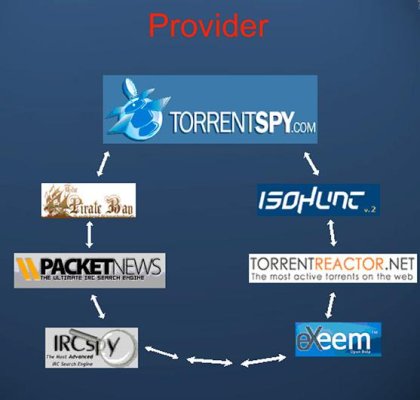
Wired has an interview with Robert Anderson, a hacker-for-hire who went to work for the MPAA, illegally breaking into BitTorrent trackers and snooping on their email:


According to Anderson, the MPAA told him: “We would need somebody like you. We would give you a nice paying job, a house, a car, anything you needed…. if you save Hollywood for us you can become rich and powerful…”

But once Anderson turned over the data and cashed the MPAA’s check, he quickly realized that Garfield had no further use for him. “He lost interest in me,” he says. Anderson felt abandoned: During negotiations with Garfield, the hacker had become convinced he was starting a long-term, lucrative relationship with the motion picture industry. “He was stringing me along personally.”

Hollywood’s cold shoulder put Anderson’s allegiance back up for grabs, and about a year later he came clean with TorrentSpy’s Bunnell in an online chat. “‘I sold you out to the MPAA,'” Anderson says he told Bunnell. “I felt guilty (for) what happened and I kinda also thought at that point the MPAA wasn’t going to do anything.”

Link

I thought people would like to read the interview also!! Enjoy

Meebo Has Ads

Two years after launching (in my living room at a TechCrunch event), web chat startup Meebo has begun to monetize their service.

Normal ad units don’t work on Meebo. While users stay on most sites for just a minute or two before leaving or creating a new page view by clicking on an internal link, the average user session at Meebo is 2.5 hours without any page refreshes. And 20% of Meebo user have sessions of 10+ hours – they basically never close the application. Selling ads based on page view doesn’t make sense at Meebo; instead, they had to invent a new kind of ad.

What they’ve done is create a persistent ad unit combination that allows users to click and add new buddy icons and background themes, watch videos, listen to music, etc. Or simply get rid of the ads. See the screen shot for a visual, and click for a larger view. Ads are charged a negotiated rate, at around a $10 “CPM.” In this case, Meebo will occasionally change the ads during a user session, up to five times per session. Each session is an impression, and a thousand of them are $10. If a user clicks to close an ad, no new one shows up in that session.

So far so good. The ads have only been up a short time and Meebo has just one sales person. Yet they’ve closed “tens of thousands of dollars” in business.

If the ads work, look for other sites to begin to look for ways to copy the idea. VideoEgg recently ported their popular Flash video advertising solution to make it

work on widgets in general, and Facebook widgets specifically. Stuff that works persists.

Hmm, I wonder how long it will take before people move to some other widget.